The 1962 U.S. Open
Jack Nicklaus wins his first major, beating Arnold Palmer in a playoff.

This is an excerpt from ‘The Story of Golf in 50 Tournaments'.
Venue: Oakmont CC, Oakmont, Pa.
Dates: June 14-17
Winner’s Prize: $15,000 plus $2,500 bonus from playoff gate receipts
In the field: Jack Nicklaus, Arnold Palmer, Gary Player, Gene Littler, Sam Snead
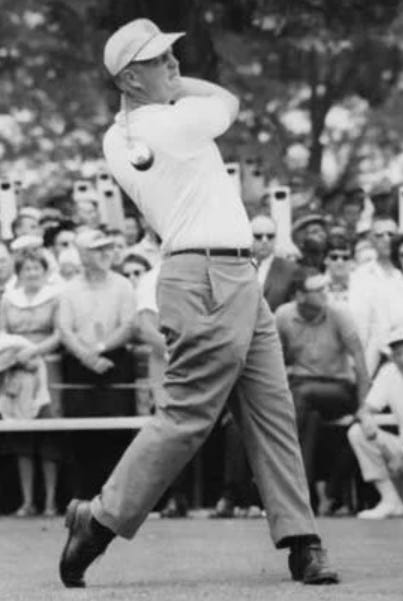
Jack Nicklaus was 22 years old when he arrived at Oakmont CC for the 62nd U.S. Open. Most professionals would be learning how to perform on the world’s biggest stages at that age and gaining valuable experience that could pay off later (the average age of major winners is around 32 but was slightly higher in the 1960s). But Nicklaus was, of course, a very different animal.
He won the Ohio State Junior Championship for the first time at age 12 and took the next four titles, too. In 1953, aged 13, he broke 70 at Scioto CC and qualified for his first U.S. Junior Championship. He played his first U.S. Amateur in 1955, and a year later, won the Ohio Open against the state’s best professionals, shooting a third-round 64 (he also played an exhibition match with Sam Snead that week).
In 1957, he played in the first of 44 straight U.S. Opens, and he won the U.S. Amateur in 1959 and 1961 while attending Ohio State University. At his first-ever PGA Tour event, the 1958 Rubber City Open in Akron, Ohio, he finished tied for 12th, having been one off the lead after 36 holes.
His first of 45 Masters appearances came in 1959, and at Denver’s Cherry Hills CC the following year, he finished 2nd at the U.S. Open, two back of Arnold Palmer who closed with a 65 after driving the green at the 346-yard 1st hole (an exceptional shot in 1960).
Then, after recording the first of 22 top-10 finishes at the Masters in 1961, Nicklaus tied for 4th at the U.S. Open.
So, although he hadn’t actually won a major championship yet (nor, indeed, a tournament on the PGA Tour), Nicklaus was clearly on the brink of doing so. After initially planning to become a pharmacist like his father, and then briefly selling insurance, Nicklaus decided to turn professional in November 1961. In the first five months of the 1962 season, he played 17 PGA Tour events, finishing in the top 10 seven times. The seventh of those top 10s came the week before the U.S. Open, when he finished 2nd at the Thunderbird Classic Invitational in New Jersey.
At Oakmont, Nicklaus played with Palmer for the first two rounds along with 1959 PGA champion, Bob Rosburg. All three were inside the top 10 after the opening round. Nicklaus struggled a little on the notoriously fast greens but still signed for a 72 that put him in a tie for 9th. Palmer was a shot better, but it was Rosburg who recorded the best score, carding a 70 that put him a shot behind the defending champion, Gene Littler (who, in his first-ever round at Oakmont—a practice round on Tuesday— had shot an 82).
Poor Putting Denies Palmer
In 1962, the final two rounds were still played on Saturday (the first time the four rounds finished on a Sunday was 1965), and Palmer certainly started the day as the man to beat. Indeed, his play through the green was excellent, enabling him to build a three-shot lead at one point on Saturday morning. Ultimately, though, his putting let him down badly. He shot 73-71 in rounds three and four, while Nicklaus had a 72 in the morning and followed it with a gutsy 69, one of just four sub-par rounds in the afternoon. He made up the two shots Palmer had led by, and they both finished on 1-under, 283, for 72 holes—two ahead of Nichols and Phil Rodgers. Eighteen more holes on Sunday would be needed to break the tie.
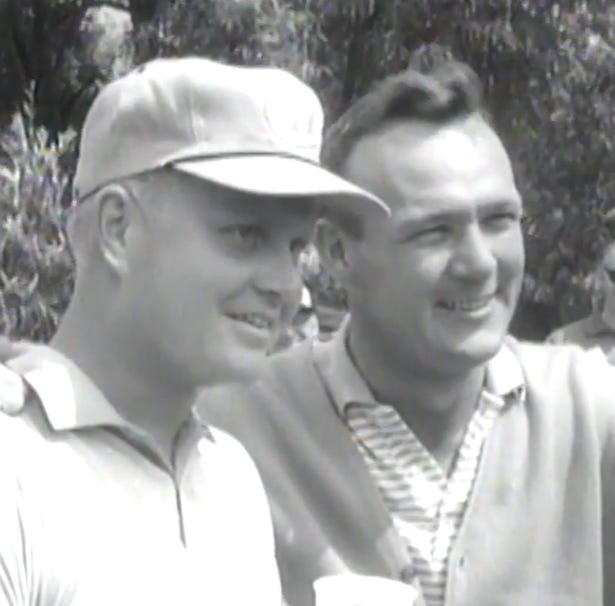
A crowd of 10,000 showed up to watch a contest the press called “The King vs. the Kid.” The vast majority were there to cheer on Palmer, a Pennsylvania native born in 1929 in the blue-collar town of Latrobe - just 35 miles southeast of Oakmont.
Nicklaus didn’t appear perturbed by the gallery’s obvious bias (the less polite spectators focused on the younger player’s weight, calling him “Ohio Fats”), though Palmer, ever the sportsman, was visibly embarrassed by it.
Nicklaus got off to the better start, making five straight fours, then a two at the 6th, giving him a four-stroke lead. The following day, The Pittsburgh Press said the crowd hadn’t seemed overly concerned at this point, joking that their man was simply spotting Nicklaus a few strokes and liked to come from behind. Sure enough, after a Nicklaus bogey at the 9th, and Palmer birdies at the 11th and 12th, the gap was down to one with six holes left to play.
The short 13th stopped Palmer’s comeback in its tracks, however, as he three-putted for the 10th time that week. “I wanted to win so badly, I think it affected me on the greens,” he said afterward. “I wanted every putt to drop, and when I missed the first try, I was in a daze. That’s the only way I can explain those short ones I missed.”
In the end, Nicklaus shot an even-par 71 while Palmer finished with a 74. Nicklaus had won his first major – and his first PGA Tour event - and was now the reigning U.S. Open and U.S. Amateur champion.
Winning your first professional major by beating Arnold Palmer in front of his home crowd on so difficult a course would have required a lot of guts, confidence, poise, and talent. Over the next 35-40 years, Nicklaus showed us just how much of each he had.
The U.S. Open at Oakmont
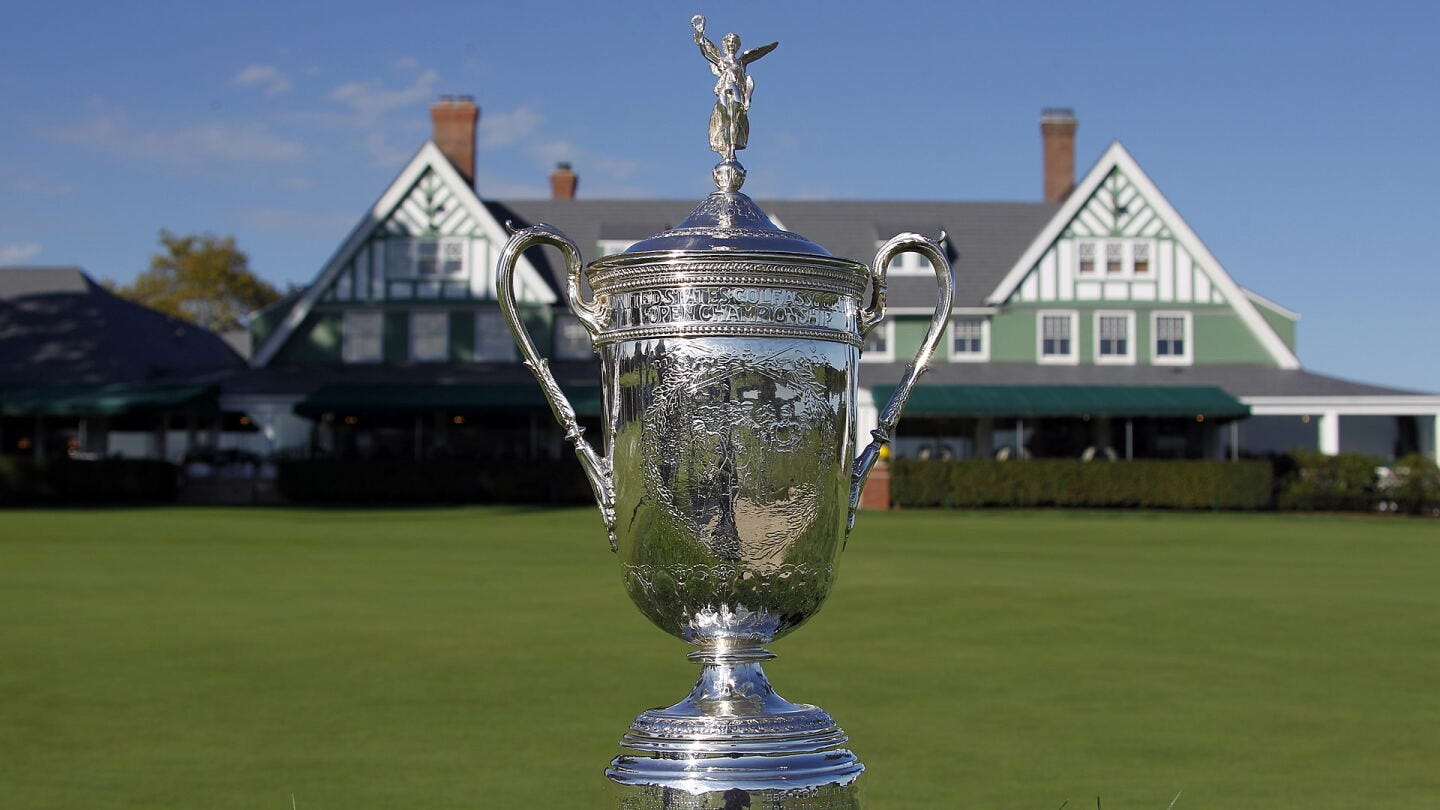
In the lead-up to the 2025 U.S. Open, the consensus among golf writers was that Oakmont was the quintessential U.S. Open venue. It had long had a reputation for being extremely difficult, with stories of the USGA actually having to slow the greens down for the championship, but there now seemed to be solid agreement among pundits, analysts, and columnists who concurred it was only right the game’s toughest tournament should be played on its toughest course. In the 2017 edition of the club’s history, written by Pittsburgh golf writer Marino Parascenzo, the USGA’s executive director, Mike Davis, paid Oakmont the ultimate compliment, saying it was the “true gold standard in championship golf.”
It was designed by its owner - iron and steel magnate Henry Fownes, an accomplished golfer who wanted to build a course considerably more demanding than what the area had to offer at the time. It opened on 191 acres of farmland, 14 miles northeast of Pittsburgh, in 1903 and hosted a couple of U.S. Amateurs and a PGA Championship (won by Gene Sarazen) before it staged its first U.S. Open in 1927.
Since then, the course has gone through two transformations. Following the 1953 U.S. Open, golf writer Herbert Warren Wind described it as an “ugly brute,” prompting the club to start planting trees in an effort to make it a beautiful brute. It went from being fairly stark and austere to a tree-lined course.
Beginning in the early 1990s, however, the club’s superintendents—first Larry Napora then Mark Kuhns (supported by Greens Committee Chairman, Banks Smith)—began removing trees under the cover of darkness so as not to alert the members, most of whom took a while to gather what was happening. In the mid-to-late 1990s, the course lost something like 15,000 trees, becoming the open, exposed layout it had originally been. The shade may have been lost, but the turf could once again benefit from air movement and exposure to the sun.
The winning scores at its first 10 U.S. Opens indicate just how difficult Oakmont can be—trees or no trees.
1927—Tommy Armour shot 13-over 301 and beat Harry Cooper in a playoff
1935—Sam Parks won +11, 299.
1953—Ben Hogan won on -5, 283
1962—Jack Nicklaus shot -1, 283 and beat Arnold Palmer in a playoff
1973—Johnny Miller won on -5, 279.
1980—Larry Nelson won on -4, 280.
1994—Ernie Els shot -5, 279 and beat Colin Montgomerie and Loren Roberts in a playoff
2007—Angel Cabrera won on +5, 285.
2016—Dustin Johnson won on -4, 276.
2025—J.J. Spaun won on -1, 279.
Oakmont has also hosted two U.S. Women’s Open Championships:
1992—Patty Sheehan shot -4, 280 and beat Juli Inkster in a playoff
2010—Paula Creamer won on -3, 281.
Big Three becomes established
In late 1958, a Cleveland lawyer named Mark McCormack began courting professional golfers, saying he could earn them more than they earned in prize money by arranging exhibitions and corporate appearances. Within a few months, a number of the PGA Tour’s top players had signed contracts with McCormack’s National Sports Management, including Arnold Palmer, who had won the 1958 Masters and was clearly the game’s hottest prospect.
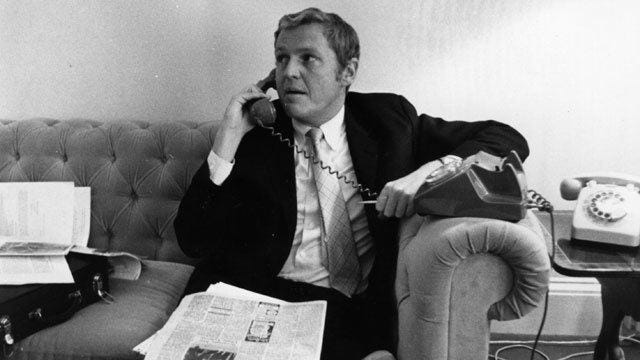
Within a year of signing his contract, however, Palmer had become disillusioned with the agreement, saying that his wife, Winnie, was handling most of the behind-the-scenes accounting and scheduling, and that being part of the group of players McCormack represented was actually hurting his earning potential.
If he was to stay with McCormack, Palmer said, he was going to have to be his only client. McCormack agreed and the two shook hands. Recognizing the perfect marketing opportunity (young, star golfer from a largely working-class city having his business affairs handled by a hotshot lawyer in a sharp suit), McCormack ensured the legend of the handshake grew (even though there would eventually be a lot of legal paperwork.)
He established International Management Group (IMG) in 1960, and despite Palmer’s wish to be his sole client, McCormack and IMG signed Gary Player later in 1960 and Jack Nicklaus (after Nicklaus turned professional) in November, 1961. Player who had won the Open Championship in 1959, 20 or so tournaments in Australia and his native South Africa, plus the 1959 Kentucky Derby Open, brought an international flavor to McCormack’s stable while Nicklaus was obviously a star in the making, even if he lacked Palmer’s charisma.
Palmer’s wins at the 1960 U.S. Open and Masters (plus the 1962 and 1964 Masters); Nicklaus’ at the ‘62 U.S. Open, and ‘63 Masters and PGA Championship; and Player’s at the 1961 Masters and ‘62 PGA Championship, helped establish the notion of a “Big Three” (it had been half a century since the Great Triumvirate of Harry Vardon, J.H. Taylor, and James Braid had dominated the Open Championship) and McCormack took every opportunity he could to make the most of it.
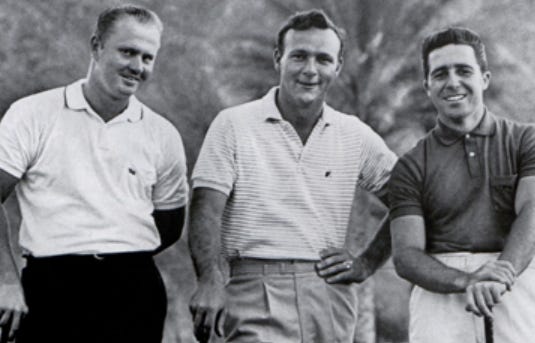
The 1962 U.S. Open was a good tournament for the Big Three, as they finished 1st, 2nd, and T6. The best major championship for the trio was the 1965 Masters when all three finished on the podium—Nicklaus winning with Palmer and Player tying for 2nd, nine shots behind. At the 1963 Phoenix Open, Palmer finished 1st while Player was 2nd and Nicklaus 3rd, and at the 1964 Whitemarsh Open in Philadelphia, the order was reversed with Nicklaus winning and Palmer coming 3rd.